

Frank’s croissant
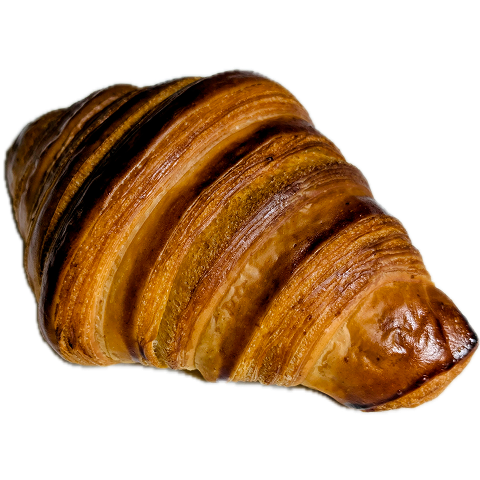
€ 2,99
Out of stock
Baker’s percentage
Wheat flour T55
100
%
Sweet Frank
38
%
Milk
40
%
Egg
11
%
Sugar
9
%
Salt
2,7
%
Butter
56
%
Baker’s math, or baker’s percentages, is a method of writing recipes where the weight of the flour is always 100%, and all other ingredients are expressed as a percentage of that flour weight.
Taking it slow
Cold fermentation
7
°C
24
h
Warm proofing
24
°C
12
h
Sweet Frank croissant
A sweet sourdough starter is essentially a regular sourdough culture that has been “retrained” through a specific feeding regimen to excel in rich, buttery, or sugary doughs.
Think of it as a professional athlete version of your regular starter—it’s been conditioned to perform under the high-pressure environment of fats and sugars that usually slow wild yeast down.
What makes it “sweet”?
It’s not necessarily sweet to the taste; rather, it’s called “sweet” because of how it’s managed. The Addition of Sugar: A small amount of sugar (usually 10–20% of the flour weight) is added during the feeding. This encourages the growth of osmotolerant yeast
Why It’s a Game-Changer for Croissants?
Neutralizing the “Sour”. Traditional sourdough can be quite tangy. While that’s great for a crusty baguette, most people don’t want their buttery, chocolate-filled croissant to taste like a vinegar bomb. The sweet starter suppresses the Acetic Acid (sharp/vinegary) and promotes Lactic Acid (creamy/yogurt-like), ensuring the flavor profile stays focused on the high-quality butter.
Superior Lift & Strength. Croissant dough is “heavy” because of the massive amount of butter layered inside. A standard sourdough starter might struggle to push through all that weight, leading to a dense, flat pastry. Because a sweet starter is “trained” to be hyper-active, it provides a powerful, steady rise that creates those beautiful, airy honeycomb layers (the alveoli).
Better “Oven Spring” and Texture. Sourdough acidity can sometimes weaken the gluten structure if it gets too high. By using a sweet starter, the baker keeps the pH in a “sweet spot” where the dough remains strong and elastic. This allows the croissant to expand dramatically in the oven—giving you that signature “shatter-crisp” crust and a soft, pillowy interior.